Darden Restaurants/$DRI
1D1W1MYTD1Y5YMAX
Capital at risk
About Darden Restaurants
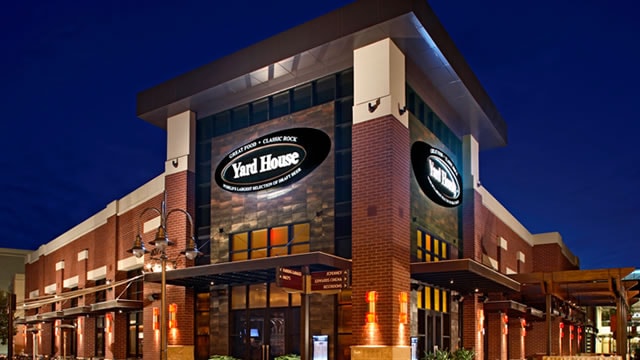
Darden Restaurants is the largest global full-service dining operator, with over $12 billion in system sales across 2,159 company-owned stores at the end of fiscal 2025, spanning the US and Canada. The firm operates 10 banners in four segments, including Olive Garden (43% of sales), LongHorn Steakhouse (25%), and fine dining (21%), which includes The Capital Grille, Ruth's Chris, and Eddie V's. The other 11% of sales comes from smaller concepts such as Yard House and Cheddar's. Darden primarily generates revenue through sales of food and beverage items at its company-owned restaurants. It also earns royalties on sales from 154 franchised locations in US and international markets, which sit within the other segment but are immaterial to consolidated results.
- Ticker
- $DRI
- Sector
- Consumer Discretionary
- Primary listing
- NYSE
- Employees
- 209,931
- Headquarters
- Orlando, United States
- Website
- www.darden.com
DRI Metrics
BasicAdvanced
$23B
19.50
$10.25
0.59
$6.12
3.24%
Price and volume
Market cap
$23B
Beta
0.59
52-week high
$229.76
52-week low
$169.00
Average daily volume
1.1M
Dividend rate
$6.12
Financial strength
Current ratio
0.298
Quick ratio
0.106
Long term debt to equity
3.67
Total debt to equity
4.144
Dividend payout ratio (TTM)
59.38%
Interest coverage (TTM)
7.90%
Profitability
EBITDA (TTM)
2,142.3
Gross margin (TTM)
21.66%
Net profit margin (TTM)
8.85%
Operating margin (TTM)
11.90%
Effective tax rate (TTM)
12.74%
Revenue per employee (TTM)
$60,000
Management effectiveness
Return on assets (TTM)
7.65%
Return on equity (TTM)
55.43%
Valuation
Price to earnings (TTM)
19.496
Price to revenue (TTM)
1.714
Price to book
10.97
Price to tangible book (TTM)
-24.24
Price to free cash flow (TTM)
22.432
Free cash flow yield (TTM)
4.46%
Free cash flow per share (TTM)
8.905
Dividend yield (TTM)
3.06%
Forward dividend yield
3.24%
Growth
Revenue change (TTM)
8.10%
Earnings per share change (TTM)
9.86%
3-year revenue growth (CAGR)
7.46%
10-year revenue growth (CAGR)
6.74%
3-year earnings per share growth (CAGR)
8.43%
10-year earnings per share growth (CAGR)
12.71%
3-year dividend per share growth (CAGR)
7.40%
10-year dividend per share growth (CAGR)
11.24%
What the Analysts think about DRI
Analyst ratings (Buy, Hold, Sell) for Darden Restaurants stock.
Analyst projections of the future price of Darden Restaurants stock.
Bulls say / Bears say
Darden is gaining share with broad-based momentum. Fiscal 2026 same-restaurant sales rose 4.5%, with Olive Garden up 4.0% and LongHorn up 7.2%, while fourth-quarter traffic and guest counts outpaced the industry by more than 300 basis points. (Darden Restaurants, FSR magazine)
Unit growth offers a second engine beyond mature restaurants. Darden plans 75 to 80 gross openings in fiscal 2027, plus 11 Bahama Breeze conversions, and says its portfolio and new-store returns support continued organic expansion. (Darden Restaurants, Roic AI)
Shareholder returns remain a strength. Darden raised its quarterly dividend by 8% and authorised a new $1.5 billion buyback, while management says its cash-generative model can fund dividends, maintenance investment and restaurant development. (Darden Restaurants, PR Newswire)
Darden’s fiscal 2027 same-restaurant sales outlook of 2.5% to 3.5% is a clear slowdown from 4.5% in fiscal 2026. The company also missed quarterly revenue expectations, while its guidance came in below Wall Street’s forecast. (CNBC, Darden Restaurants)
Food and labour inflation could squeeze profits if Darden cannot pass through the full increase without hurting traffic. Earlier results showed beef-driven commodity inflation weighing on restaurant-level margins, while fiscal 2027 includes roughly 3% total inflation and higher labour costs. (The Motley Fool, Darden Restaurants)
The portfolio still has important weak spots: Olive Garden’s fourth-quarter same-restaurant sales growth was 2.4%, below expectations, and fine dining grew only 1.9%. Closing Bahama Breeze and converting 11 sites also creates execution risk and adds complexity during the expansion programme. (CNBC, Darden Restaurants)
Data summarised monthly by Lightyear AI. Last updated on 15 Sept 2026.
DRI Financial Performance
Revenues and expenses
DRI Earnings Performance
Company profitability
Upcoming events
DRI News
AllArticlesVideos


Funds containing DRI
AllGBPUSDEUR
Fund name | Fund size | $DRI weighting |
|---|---|---|
iShares S&P 500 Consumer Discretionary Sector£ICDU | £555M | 0.52% |
iShares MSCI USA Quality Dividend ESG£HDIQ | £578M | 0.36% |
iShares MSCI World Quality Dividend$WQDV | $1.8B | 0.26% |
iShares MSCI World Quality Dividend£WQDS | £1.3B | 0.26% |
iShares S&P 500 Equal Weight€O4J0 | €4.3B | 0.20% |
Data displayed above is indicative only and its accuracy or completeness is not guaranteed. Actual execution price may vary. Past performance is not indicative of future results. Your return may be affected by currency fluctuations and applicable fees and charges. Capital at risk.
Real-time US market data is sourced from the IEX order book provided by Polygon. After-hours US market data is 15 minutes delayed and may differ significantly from the actual tradable price at market open.