Paccar/$PCAR
1D1W1M3M6MYTD1Y5YMAX
Capital at risk
About Paccar
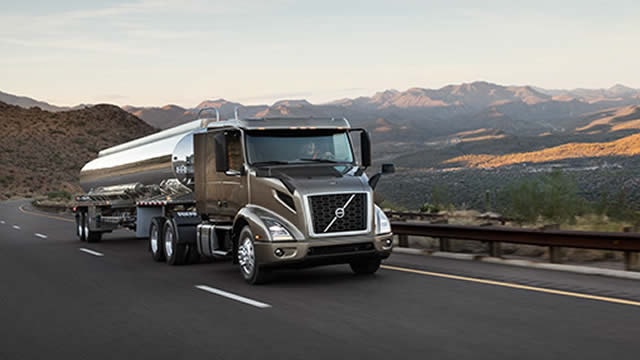
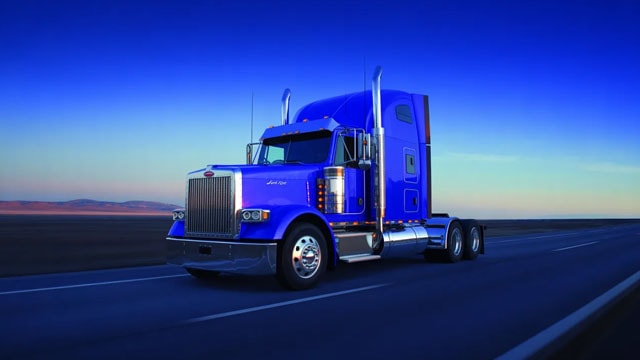
Paccar is a leading manufacturer of medium- and heavy-duty trucks under the premium nameplates Kenworth and Peterbilt, which are primarily sold in the Americas and Australia, and DAF, which primarily services Europe and South America. The trucks segment (74% sales) goes to market through a network of 2,200 independent dealers. Paccar maintains an internal finance subsidiary that provides retail and wholesale financing for customers and dealers (6% sales). In recent years, Paccar has aggressively expanded its parts business (20% of sales), including engines, axles, and transmissions for its own truck brands as well as independent producers. The company commands 30% of the Class 8 market share in North America and 15% of the heavy-duty market share in Europe.
- Ticker
- $PCAR
- Sector
- Industrials
- Primary listing
- NASDAQ
- Employees
- 25,900
- Headquarters
- Bellevue, United States
- Website
- www.paccar.com
Paccar Metrics
BasicAdvanced
$56B
20.14
$5.24
0.96
$2.76
1.33%
Price and volume
Market cap
$56B
Beta
0.96
52-week high
$139.24
52-week low
$93.86
Average daily volume
3.7M
Dividend rate
$2.76
Financial strength
Current ratio
5.469
Quick ratio
1.546
Long term debt to equity
0.791
Total debt to equity
0.722
Dividend payout ratio (TTM)
52.55%
Interest coverage (TTM)
138.34%
Profitability
EBITDA (TTM)
3,601.1
Gross margin (TTM)
14.21%
Net profit margin (TTM)
9.50%
Operating margin (TTM)
11.11%
Effective tax rate (TTM)
22.07%
Revenue per employee (TTM)
$1,120,000
Management effectiveness
Return on assets (TTM)
4.53%
Return on equity (TTM)
13.71%
Valuation
Price to earnings (TTM)
20.138
Price to revenue (TTM)
1.911
Price to book
2.65
Price to tangible book (TTM)
2.65
Price to free cash flow (TTM)
25.671
Free cash flow yield (TTM)
3.90%
Free cash flow per share (TTM)
4.111
Dividend yield (TTM)
2.62%
Forward dividend yield
1.33%
Growth
Revenue change (TTM)
-1.53%
Earnings per share change (TTM)
2.75%
3-year revenue growth (CAGR)
-5.24%
10-year revenue growth (CAGR)
5.32%
3-year earnings per share growth (CAGR)
-12.53%
10-year earnings per share growth (CAGR)
16.95%
3-year dividend per share growth (CAGR)
10.06%
10-year dividend per share growth (CAGR)
7.83%
What the Analysts think about Paccar
Analyst ratings (Buy, Hold, Sell) for Paccar stock.
Analyst projections of the future price of Paccar stock.
Bulls say / Bears say
PACCAR’s third-quarter revenue rose 19% year on year and net income climbed 44%, as truck-segment pre-tax profit increased to $454.5 million from $102.5 million. Management expects fourth-quarter deliveries to rise to 41,000–43,000 trucks. (PACCAR)
The parts business provides a valuable stream of repeat sales: it posted record third-quarter revenue of $1.78 billion, supported by expanded distribution, dealer services and its all-makes parts brand. (PACCAR)
PACCAR expects North American Class 8 truck sales to reach 240,000–280,000 in 2027, with European demand holding at 300,000–320,000 and South American sales rising to 105,000–115,000. Fleet replacement and investment in infrastructure could support volumes across its main markets. (PACCAR)
Supplier shortages held third-quarter deliveries to 40,100 trucks, below PACCAR’s expected 42,000. If suppliers cannot ramp up reliably, the company may struggle to convert strong orders into revenue. (Transport Topics)
Uncertainty over 2027 emissions penalties is making some customers pause on orders because they do not yet know the cost of buying current-generation engines. That could make early-2027 demand and pricing harder to predict. (The Motley Fool)
Credit costs are rising: the provision for losses on receivables was $112.1 million in the first nine months of 2026, up from $84.0 million a year earlier. Further deterioration in fleet customers’ ability to pay could weigh on finance profits. (SEC)
Data summarised monthly by Lightyear AI. Last updated on 9 Nov 2026.
Paccar Financial Performance
Revenues and expenses
Paccar Earnings Performance
Company profitability
Upcoming events
Paccar News
AllArticlesVideos
Funds containing Paccar
AllUSDEURGBP
Fund name | Fund size | $PCAR weighting |
|---|---|---|
iShares S&P 500 Industrials Sector£IISU | $700M | 1.04% |
iShares S&P 500 Industrials Sector€2B7C | $700M | 1.04% |
iShares MSCI USA Quality Dividend Advanced$QDIV | $850M | 0.85% |
iShares MSCI USA Quality Dividend ESG£HDIQ | $850M | 0.85% |
iShares MSCI World Quality Dividend$WQDV | $1.8B | 0.58% |
Data displayed above is indicative only and its accuracy or completeness is not guaranteed. Actual execution price may vary. Past performance is not indicative of future results. Your return may be affected by currency fluctuations and applicable fees and charges. Capital at risk.
Real-time US market data is sourced from the IEX order book provided by Polygon. After-hours US market data is 15 minutes delayed and may differ significantly from the actual tradable price at market open.